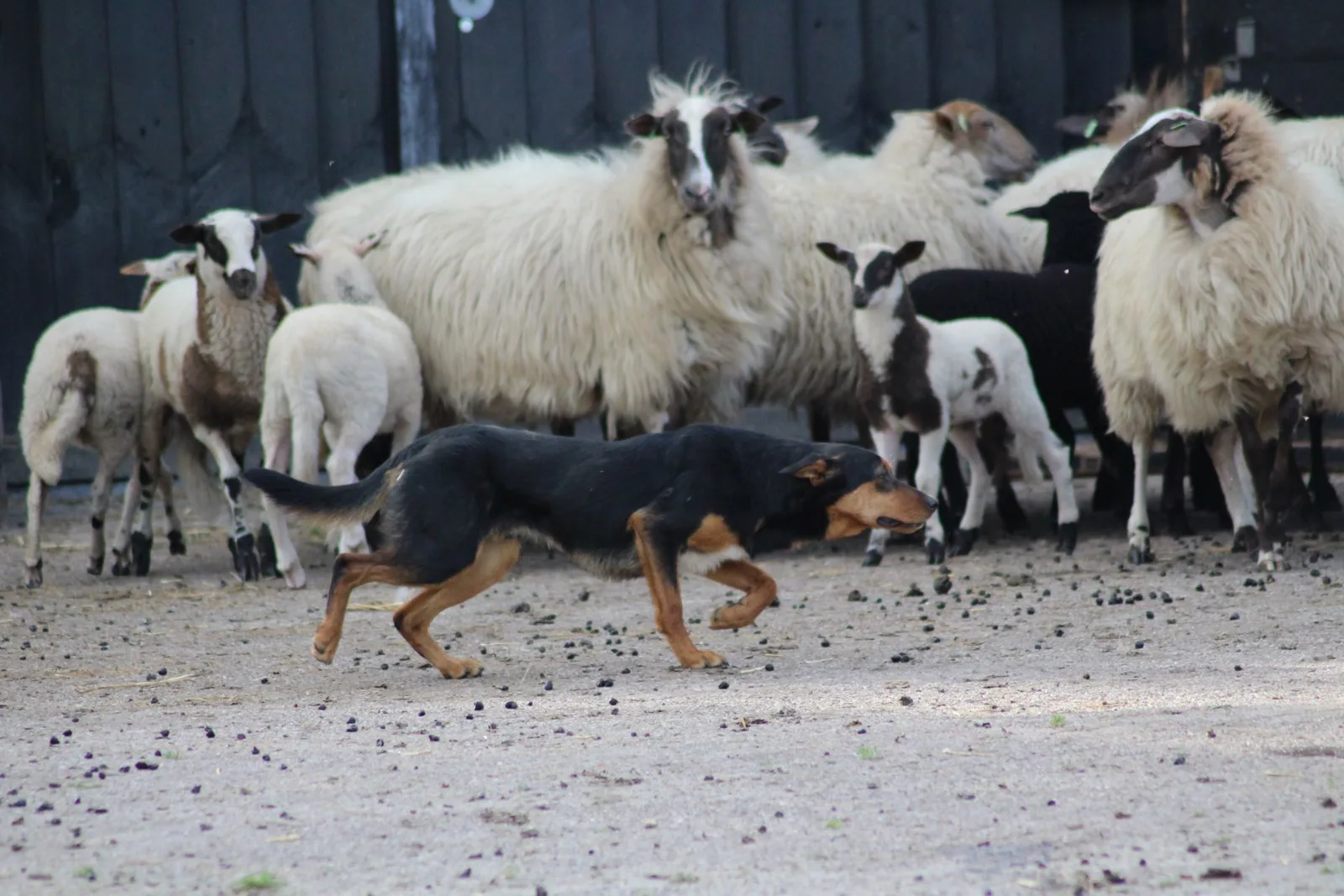
- A Working Kelpie breeder with a real flock can evaluate dogs on practical work, not just on appearance or sports.
- Daily flock work demonstrates how a dog reads pressure, finds balance, and cooperates with livestock.
- For puppy buyers and handlers, practical experience is essential when it comes to selection, training, and guidance.
- Shepherds Working Kelpies operates from Doldersum, Drenthe, near the Drents-Friese Wold.
- Erika Visser and Catrinus Homan combine animal health knowledge with practical shepherd experience.
- Why is working with a real flock important?
- Field-tested versus sports- or show-oriented
- What does this say about puppies and working lines?
- Why practical experience helps with training and guidance
- Working Kelpies in Doldersum, Drenthe
- Step-by-step guide to evaluating a practical breeder
- Frequently asked questions
Why is working with a real flock important?
A Working Kelpie was originally bred as a practical livestock herding dog. This means that its quality is not only evident in a description, pedigree, or training video, but above all in daily work with animals. A real flock requires the dog to read pressure, keep distance, maintain an overview, and cooperate with the handler.
In practice, no two situations are the same. Sheep may react differently depending on the weather, terrain, stress, age, flock behaviour, or previous experiences. A dog that regularly works with a real flock learns to handle variation. For a breeder or trainer, this provides far more insight than just a momentary snapshot on a training field.
Field-tested versus sports- or show-oriented
A Working Kelpie can be athletic, fast, and obedient, but that does not automatically make it suitable for daily flock work. Practical work demands more than speed. The dog must be able to switch between initiative and obedience, apply and release pressure, and move livestock without causing unnecessary stress.
With show-oriented lines, the emphasis is often on appearance and the breed standard. In sport-oriented work, the focus may lie on exercise routines, points, or technical execution. In practical flock work, what matters most is whether the dog can perform real work in a calm and effective manner.
| Comparison | Practice with a real flock | Sports, show, or isolated training only |
|---|---|---|
| Assessment | The dog is evaluated on daily performance with livestock. | The assessment may be limited to appearance, exercises, or a momentary snapshot. |
| Livestock sense | Stock sense, balance, and pressure regulation become evident in real situations. | Livestock sense can be harder to evaluate outside of practical work. |
| Resilience | The dog must be able to recover physically and mentally after work. | Short training sessions reveal less about sustained workability. |
| Advice for puppy buyers | Advice is based on real experience with dogs, sheep, and working lines. | Advice may be more general and less practically oriented. |
What does this say about puppies and working lines?
A puppy from working lines is not born as a ready-made working dog, but the aptitude of the parents is essential. When the parents work in practice, the breeder can better explain which traits are evident in the line. Think of balance, independence, stamina, trainability, recovery capacity, and sensitivity to pressure.
For puppy buyers, this is invaluable. Someone who works with livestock daily may need a different puppy than a novice handler or an individual without their own flock. A breeder who knows the dogs in practice can better assess which puppy and which bloodline suit your situation.
Why practical experience helps with training and guidance
Training a Working Kelpie is not just about commands. The handler must learn to watch the dog and the livestock simultaneously. When does movement occur? When is the dog applying too much pressure? When should the handler deliberately do nothing? Such timing is learned primarily in real working situations.
A breeder or trainer with their own flock can explain these situations tangibly. This helps with questions about young dogs, sheepdog training, low stress stock handling, and the development of working-line puppies. It makes guidance more practical and less theoretical.
Working Kelpies in Doldersum, Drenthe
Shepherds Working Kelpies operates from Doldersum in Drenthe, in the area of the Drents-Friese Wold National Park. This location is relevant because the dogs are not merely presented as a breed, but are actively evaluated through practical work with the flock, terrain, and handler.
Erika Visser brings knowledge of animal health, behaviour, and animal care. Catrinus Homan contributes experience as a second-generation shepherd. This combination provides a comprehensive evaluation of Working Kelpies: health, temperament, working instinct, and practical utility are assessed together.
Step-by-step guide to evaluating a practical breeder
- Ask if the dogs genuinely work with livestock. Ask not only about breed purity, but about daily practical experience.
- Discuss the parent dogs. Inquire about what they do, which livestock they work with, and what traits they exhibit.
- Look at the guidance provided. A practically oriented breeder can explain which training and approach suit the line.
- Pay attention to honesty. A good breeder highlights not only strengths, but also points of attention.
- Choose based on the right match. The right Working Kelpie suits your experience, working goals, living environment, and training opportunities.
Frequently asked questions about Working Kelpie breeders with a real flock
A real flock demonstrates how a Working Kelpie functions in real-world situations. The dog must be able to read stock, regulate pressure, maintain distance, cooperate, and recover after physical exertion. These types of traits become clearer in daily flock work than in just brief training sessions, shows, or general breed descriptions.
What does field-tested mean for a Working Kelpie?
Field-tested means that the dog is not only theoretically capable, but actively works with livestock. For Working Kelpies, this involves traits such as stock sense, balance, stamina, independence, and control. The dog must remain effective for the handler and the flock in real-life situations.
Is a Working Kelpie from a practical line always better?
Not necessarily for everyone. A practical working line makes the most sense if you are looking for a dog for livestock, sheep herding, or serious training. For someone without livestock, such a dog might have too much working drive. Therefore, the match between dog, owner, experience, and purpose remains more important than origin alone.
What should I ask a breeder?
Ask about the parent dogs, the work they do, their experience with sheep or other livestock, health information, temperament, and guidance after purchase. Also ask how puppies are matched with prospective owners. A practical breeder can explain why a particular line or puppy is or is not suitable for your situation.
Does Shepherds Working Kelpies work with dogs in practice?
Shepherds Working Kelpies positions itself as a practically oriented specialist in Australian Working Kelpies based in Doldersum, Drenthe. The emphasis is on dogs that work with an actual flock of sheep, low stress stock handling, and evaluation of working traits. This makes practical experience a vital part of the advice given to puppy buyers and course participants.
Related articles
- What is the difference between a Working Kelpie and an Australian Kelpie?
- How do you choose a Working Kelpie puppy from working lines?
- Working Kelpie training in sheepdog herding
- Low stress stock handling in Working Kelpies