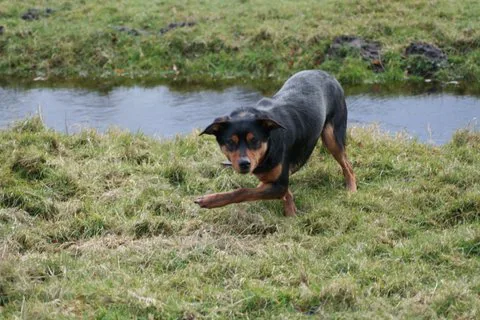
- A Working Kelpie without livestock is not impossible, but requires substantial experience, time, and guidance.
- This breed is bred for working traits such as livestock sense, initiative, endurance, and trainability.
- Walking, playing, or general dog sports do not always replace the type of work the dog was bred for.
- An honest selection interview prevents both puppy and owner from facing difficulties later on.
- Shepherds Working Kelpies evaluates the match based on practical experience with dogs and flocks in Doldersum, Drenthe.
- The short answer: sometimes, but not just like that
- Why livestock is important for a Working Kelpie
- When can a Working Kelpie without livestock be a good match?
- When is it not a sensible choice?
- Why a selection interview is necessary
- Advice based on practical experience in Doldersum
- Frequently asked questions
The short answer: sometimes, but not just like that
Buying a Working Kelpie puppy without owning livestock is not entirely ruled out by definition, but it demands an honest evaluation of your experience, lifestyle, and future plans with the dog. A Working Kelpie is not a standard active family dog, but a dog from working lines selected for working ability, independence, and cooperation with a handler.
It is precisely these traits that make the breed remarkable, yet also demanding. A puppy can develop into a dog that reacts quickly to movement, prefers to maintain control, and invents its own tasks if not given clear direction. Therefore, the question is not merely whether you have enough time, but primarily whether you can offer the dog the right kind of work and guidance.
Why livestock is important for a Working Kelpie
A Working Kelpie is bred to work with livestock. Around sheep, ducks, geese, or other livestock, the dog can utilise its natural instinct: reading pressure, keeping distance, finding balance, directing movement, and collaborating with the handler. Without livestock, this natural ability often remains present, but the dog has fewer opportunities to apply it in a functional way.
This does not mean that every Working Kelpie without livestock will automatically develop behavioral problems. It does mean, however, that the owner must manage training, stimulus processing, rest, and mental challenges far more consciously. A dog that is physically tired may still remain mentally “on” if not provided with suitable work.
| Situation | Chance of success | Key consideration |
|---|---|---|
| No livestock, but experience with working dogs | Sometimes suitable, provided there is serious training and structure. | The dog must learn to rest and not seek out controlling tasks independently. |
| No livestock, but regular sheep herding training on location | Can be suitable with proper guidance. | Training must be structured responsibly, not used merely as an energy outlet. |
| Busy household without clear structure | Usually less suitable. | Overstimulation and controlling behavior are significant risks. |
| Only seeking a companion household pet | Usually not a good match. | The dog’s working drive is easily underestimated in this case. |
When can a Working Kelpie without livestock be a good match?
A Working Kelpie without personal livestock can suit someone who consciously chooses a working dog and is willing to invest seriously in its guidance. Think of owners experienced with sensitive, fast, or task-oriented dogs, individuals willing to attend regular sheep herding training, or handlers who excel at providing rest, clear boundaries, and mental stimulation.
It is crucial that the owner is not only active, but also calm and consistent. A Working Kelpie does not constantly need more stimulation, but rather better guidance. The dog must learn when it is permitted to work, when it must wait, and when it does not need to do anything.
When is it not a sensible choice?
A Working Kelpie puppy is generally not a sensible choice if you are primarily looking for an easy-going family companion, have little experience with working breeds, or expect that ample physical exercise alone will suffice. Likewise, if you have limited time for training, guidance, and establishing rest, the match can prove difficult.
A puppy may be small and endearing initially, but it grows into a fast, intelligent dog with considerable initiative. This is precisely why it is essential to discuss honestly before purchase whether the dog fits your home situation. An unsuitable match is not only challenging for the owner, but also unfair to the dog.
Why a selection interview is necessary
A selection interview helps determine whether a Working Kelpie puppy from working lines fits your specific circumstances. This involves more than simply asking if you are a dog lover; it evaluates the combination of your experience, living environment, available time, calm in the household, training options, and potential access to livestock.
The breeder must also be able to explain honestly what characteristics exist in a given bloodline. Some puppies are stronger, more independent, or more sensitive than others. A proper match requires far more than a “first come, first served” approach. The right puppy must fit the intended purpose and the person who will guide it.
Advice based on practical experience in Doldersum
Shepherds Working Kelpies operates from Doldersum, Drenthe, near the Drents-Friese Wold. The dogs are assessed through practical work with an active flock. This keeps the advice provided to puppy buyers concrete: the recurring question is always whether this specific dog will receive an appropriate life and purposeful tasks in this environment.
Erika Visser contributes expertise in animal health, behavior, and care. Catrinus Homan, as a second-generation shepherd, evaluates working instinct, balance, and practical capability with livestock. Together, this experience provides an honest assessment of whether a Working Kelpie without livestock is a responsible choice.
Frequently asked questions about a Working Kelpie puppy without livestock
This is sometimes possible, but it depends heavily on your experience, lifestyle, and training opportunities. A Working Kelpie is bred to work with livestock and requires considerable mental stimulation. Without livestock, you must responsibly provide task-oriented work, rest, guidance, and sufficient structure through alternative means.
Is a Working Kelpie suitable as a regular family dog?
A Working Kelpie can live within a family, but is generally not a conventional family dog. The breed possesses high working drive, reacts rapidly to movement, and requires clear guidance. In a busy household without structure, the dog may become unsettled or develop controlling behavior.
What can I do with a Working Kelpie if I do not own sheep?
Without sheep of your own, you must consider serious training, mental challenges, potentially sheep herding training on location, and a clear daily routine. Walking or playing alone is usually insufficient. The dog requires work that demands thinking, cooperating, waiting, switching focus, and responding in a controlled manner.
Why do breeders ask if I have livestock?
Breeders inquire about livestock because a Working Kelpie from working lines is bred specifically for practical flock management. The presence of livestock reflects the type of lifestyle and workload the dog will have. It is not a superficial requirement, but a method to assess whether the puppy’s natural instinct matches the future situation.
When should I not choose a Working Kelpie puppy?
A Working Kelpie puppy is generally not a good choice if you are primarily seeking a calm household pet, have little experience with active working breeds, or have limited time for training and guidance. If you are mainly attracted by the breed’s appearance, it is strongly advised to seek honest counsel beforehand.
Related articles
- How do you choose a Working Kelpie puppy from working lines?
- How does the waiting list for a Working Kelpie puppy work?
- What is the difference between a Working Kelpie and a standard Australian Kelpie?
- Working Kelpie training in sheep herding