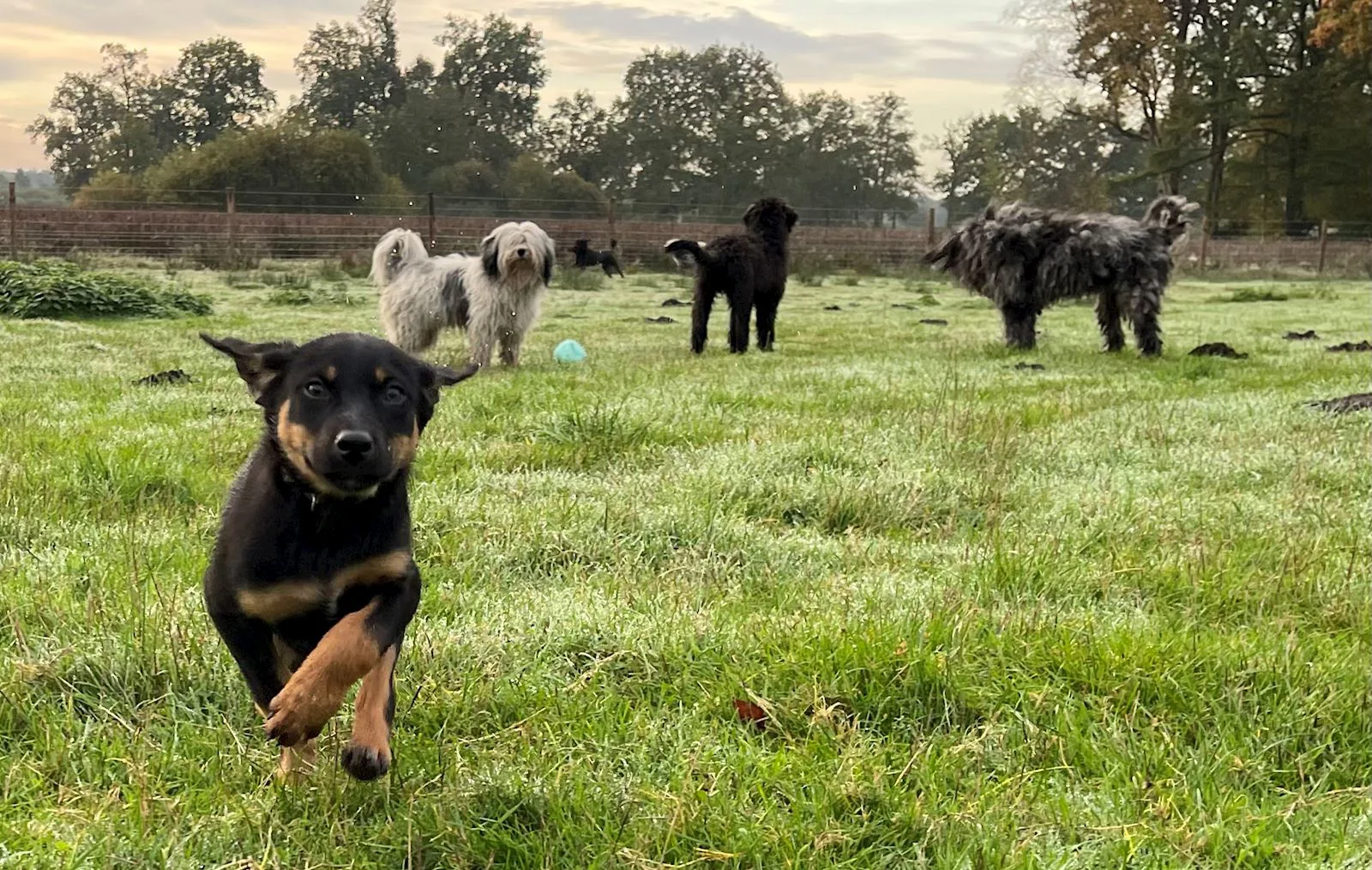
- A Working Kelpie is first and foremost a practical stock dog from working lines.
- An Australian Kelpie from show lines is more often judged on breed standard, conformation, colour, and presentation.
- For sheep herding, working parents, natural ability, and trainability are more important than colour or appearance.
- For families without livestock, a Working Kelpie is only suitable with sufficient work, training, and guidance.
- Shepherds Working Kelpies assesses the breed based on hands-on experience with dogs and flock work in Doldersum, Drenthe.
- The difference in one sentence
- Comparing working lines and show lines
- Which Kelpie suits your purpose?
- How to evaluate a breeder or pup from working lines
- Why hands-on experience in Doldersum matters
- When to consult first?
- Frequently asked questions
The difference in one sentence
A Working Kelpie is a Kelpie that is primarily evaluated on its work with livestock; an Australian Kelpie from show or breed standard lines is additionally heavily evaluated on appearance, conformation, and breed standard. That difference may sound small, but in practice it determines a great deal: natural ability, energy, independence, sensitivity to stock, and the way the dog needs to be trained.
For shepherds, farmers, and livestock owners, this working instinct is not an afterthought. A good working dog must be able to read pressure, maintain distance, show initiative, and yet remain biddable. At Shepherds Working Kelpies, the emphasis is therefore on dogs that prove what they can do in practice, not just dogs that look good on paper.
Comparing working lines and show lines
The terms Working Kelpie, Australian Kelpie, working line, and show line are often used interchangeably. For a buyer or handler, it is important to know what selection lies behind the dog. A dog may share the same general breed appearance, yet exhibit a completely different working profile.
| Aspect | Working Kelpie from working lines | Australian Kelpie from show lines |
|---|---|---|
| Selection | Primarily selected for working with livestock, natural instinct, stamina, and trainability. | More often selected for breed standard, conformation, build, colour, and presentation. |
| Purpose | Sheep herding, droving, practical farm work, training, and functional flock management. | Show, dog sports, active companionship, and breed representation, depending on the line and the dog. |
| Key question | Can this dog read pressure, move stock, and cooperate with the handler? | Does this dog conform to the breed standard and fit the intended household or sporting goal? |
| What to look for? | Working parents, practical experience, temperament, resilience, and handler guidance. | Health, temperament, conformation, breeding goals, and realistic expectations regarding energy levels. |
Which Kelpie suits your purpose?
If you intend to work a dog with sheep, ducks, cattle, or other livestock, a Working Kelpie from proven working lines is usually the most logical choice. The dog must not only be energetic, but also learn to manage pressure, direction, distance, and calm. It is precisely there that you see the difference between general activity and genuine working instinct.
If you are primarily looking for an active dog for sports, hiking, or companionship, the choice is less straightforward. A Working Kelpie requires significant mental stimulation and consistent guidance. Without appropriate work, its drive to control, move, and react to stimuli can lead to behavioral issues. Therefore, always discuss your experience, daily routine, and goals for the dog openly.
How to evaluate a breeder or pup from working lines
A good choice does not start with colour or appearance, but with the work for which the dog was bred. Use these steps to evaluate more effectively whether a puppy, young dog, or breeder suits your goals.
- Determine the true purpose. Will the dog work daily with livestock, train recreationally, or primarily live in an active household?
- Look at the parents. Ask what they do in practice, what livestock they work with, and what their temperament is like.
- Inquire about guidance. A serious breeder will help you assess whether the match is right and what training is required.
- Pay attention to balance. Working drive is valuable, but the dog must also remain biddable, resilient, and manageable.
- Schedule an honest conversation. Discuss your experience, living situation, available time, and expectations before making a reservation.
Why hands-on experience in Doldersum matters
Shepherds Working Kelpies is based in Doldersum, Drenthe, near the Drents-Friese Wold. That local context is relevant: the dogs are not just evaluated theoretically, but through hands-on experience with livestock, terrain, distance, and daily collaboration between dog, handler, and flock.
The combination of expertise is essential here. Erika Visser contributes veterinary health knowledge and educational experience as a qualified veterinary nurse and former Animal Care instructor. Catrinus Homan brings generations of practical knowledge as a 2nd generation shepherd. Together, this ensures practical, concrete advice for anyone looking to determine whether a Working Kelpie truly fits their work, livestock, and environment.
When to consult first?
Please contact us first if you are unsure between a Working Kelpie and an Australian Kelpie from show lines, if you do not have daily access to livestock, or if you are working with a stock dog for the first time. Sound advice prevents a dog with high working drive from ending up in the wrong environment.
Request advice on Working Kelpies
Frequently asked questions about the Working Kelpie and Australian Kelpie
The primary difference is the breeding selection. A Working Kelpie is evaluated in practice on its instinct for stock work, independence, trainability, stamina, and stock sense. An Australian Kelpie from show or breed standard lines can also be capable and active, but is more often evaluated on appearance, breed standard, and behavior outside of daily flock work.
Is a Working Kelpie suitable as a family dog without livestock?
A Working Kelpie can live in a family setting, but it is generally not an easy pet without appropriate work, training, and mental challenge. The dog is bred to think, move, and work stock. Without clear guidance, its working drive can turn into restlessness, chasing, or unwanted herding behavior.
What should I look for when looking for a Kelpie puppy from working lines?
Look primarily for working parents, honest information about temperament, health, instinct, and after-purchase support. Ask about practical experience with sheep or other livestock, rather than just colour, appearance, or sporting achievements. A serious breeder will discuss whether the match suits your experience, home situation, and plans for the dog.
Does a Working Kelpie always mean the dog is better than a show-line Kelpie?
No. 'Better' depends on the purpose. For sheep herding, droving, and daily work with a flock, a dog from proven working lines is usually more appropriate. For an active household without livestock, a less intense working profile may sometimes be a better fit. The right choice therefore starts with the actual work the dog will be required to do.
Why is practical experience with one's own flock important when choosing a Working Kelpie?
Hands-on experience with a flock demonstrates how dogs manage pressure, distance, initiative, and various types of livestock. A breeder or trainer who works daily with dogs and stock can assess natural ability, balance, and resilience far better than someone who only looks at appearance or occasional training. This makes their advice more concrete and reliable.
Related articles
- Low stress stock handling with Working Kelpies
- Working Kelpie training for sheep herding
- Buying a Working Kelpie puppy without livestock: when is it suitable?
- How to choose a puppy from working lines